
Architecture is only as strong as its proof.
At Tokyo Scale Solutions, we don't just design for growth; we mathematically verify the limits of every environment. Our standards ensure that scalable systems remain resilient under extreme volatility.
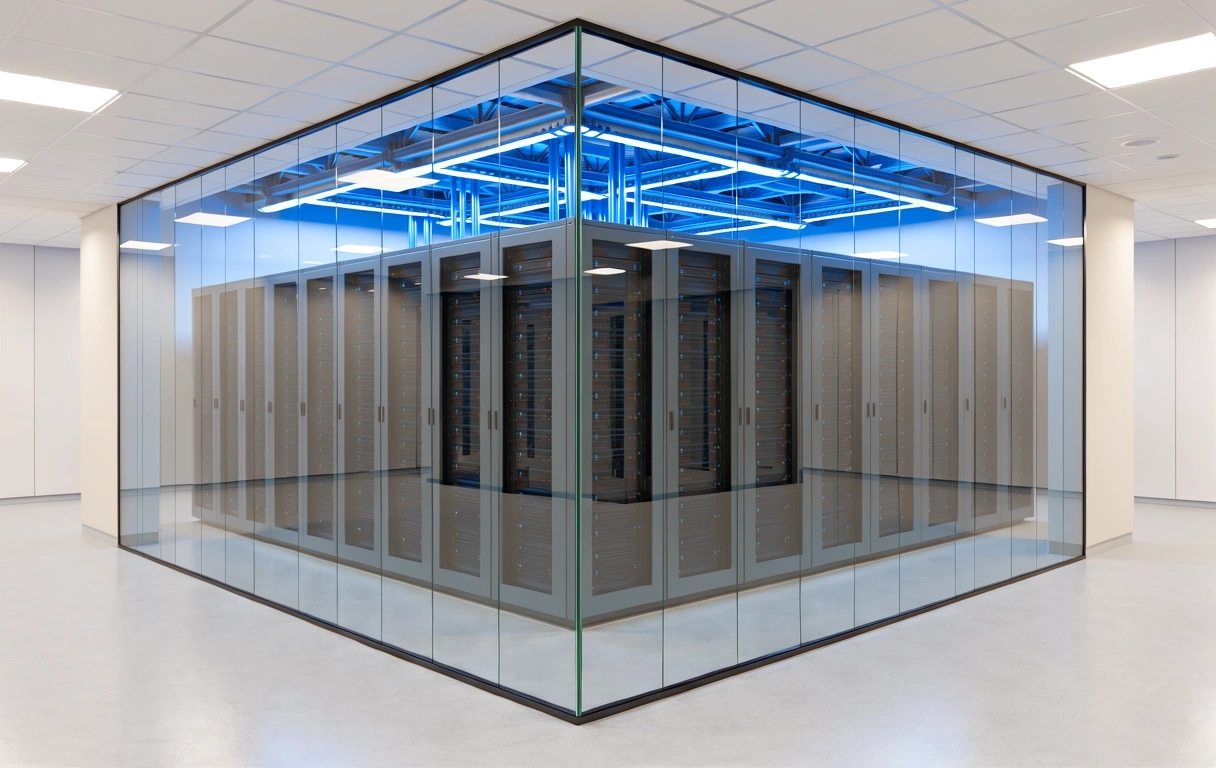
Testing Beyond the Happy Path.
Standard quality assurance often looks for what works. Our verification protocol looks for where things break.
We apply a rigorous "Stress-First" methodology to every data system we architect. This involves simulating synthetic traffic spikes that exceed 400% of your current peak load, ensuring that auto-scaling triggers perform as expected before a single byte of production data is transferred.
Load Distribution Analysis
Evaluating latency shifts across multi-region clusters under high concurrency.
Integrity Verification
Atomic transaction checks to prevent data drift during system decoupling.

The Verification Pillars
Every engagement follow a non-negotiable set of technical audits designed for Tokyo's mission-critical enterprise environments.
Concurrency Tolerance
We validate how your database handles simultaneous read/write operations during peak hours. Our tests confirm that locking mechanisms do not create bottlenecks as user volume scales linearly.
- Connection Pool Optimization
- Deadlock Prevention Audits
- IOPS Mapping
Elasticity Benchmarks
A truly scalable system must not only grow but also shrink to save costs. We verify the "cool-down" efficiency of your cloud resources after a traffic burst has subsided.
- Auto-scale Latency Testing
- Resource Allocation Floors
- Cost-to-Performance Ratios
Failover Rigidity
We simulate catastrophic node failure to measure RTO (Recovery Time Objective). Our standard ensures that system state is preserved without manual intervention.
- Disaster Recovery Validation
- State Consistency Audits
- Regional Replication Drills
Tokyo-Specific Compliance

Modern Infrastructure Tooling
Verification is not a manual task. We utilize sophisticated telemetry and observability stacks to surface performance anomalies that traditional logging misses.
Automated Governance
Continuous integration pipelines that automatically run verification scripts on every architectural change, preventing regression in performance.
Chaos Engineering Modeling
Intentionally introducing faults into non-production environments to observe system self-healing behavior under stress.
Zero-Trust Validation
Verifying that internal communication between microservices is encrypted and authenticated, ensuring security scales with the data.
The Audit Lifecycle
Requirement Mapping
We translate business objectives into measurable technical KPIs. If the business needs to handle 50,000 orders per minute, the verification standard is defined by that exact metric plus a 20% safety margin.
Simulation Design
Creation of a digital twin environment. We replicate the production stack precisely, ensuring that the verification environment produces data that is valid for real-world deployment.
Execution & Trap Testing
Running the test suites while monitoring system health. We look for hidden bottlenecks—CPU throttling, disk I/O saturation, and network hops that steal milliseconds.
Structural Hardening
Findings from the verification phase are fed back into the architecture. We optimize the system until the standards are not just met, but exceeded with headroom for future growth.
Ready for Rigorous Scale?
Ensure your next infrastructure project is built on verified ground. Contact Tokyo Scale Solutions for a technical audit or architectural deep-dive.